Roof Repairs
Repairs on Inner West terraces and semis, where box gutters, parapet flashings and shared roof junctions cause nearly every leak.
Learn more →Roof restoration for tiled Inner West homes: pressure clean, rebed and repoint ridges, replace broken tiles, then recoat. Plus when not to bother.
Repairs on Inner West terraces and semis, where box gutters, parapet flashings and shared roof junctions cause nearly every leak.
Learn more →Re-roofing Victorian and Federation terraces, semis and workers cottages, including slate and heritage-area work.
Learn more →Colorbond and metal roofing across the Inner West, including the low-pitch and concealed-gutter roof forms common on terraces.
Learn more →Box gutter replacement and parapet flashing across the Inner West, the single most common source of ceiling damage on attached housing.
Learn more →Storm response across the Inner West, where a blocked box gutter can flood a ceiling within minutes.
Learn more →Roof inspections and written reports across the Inner West, including pre-purchase checks on terraces and slate roofs.
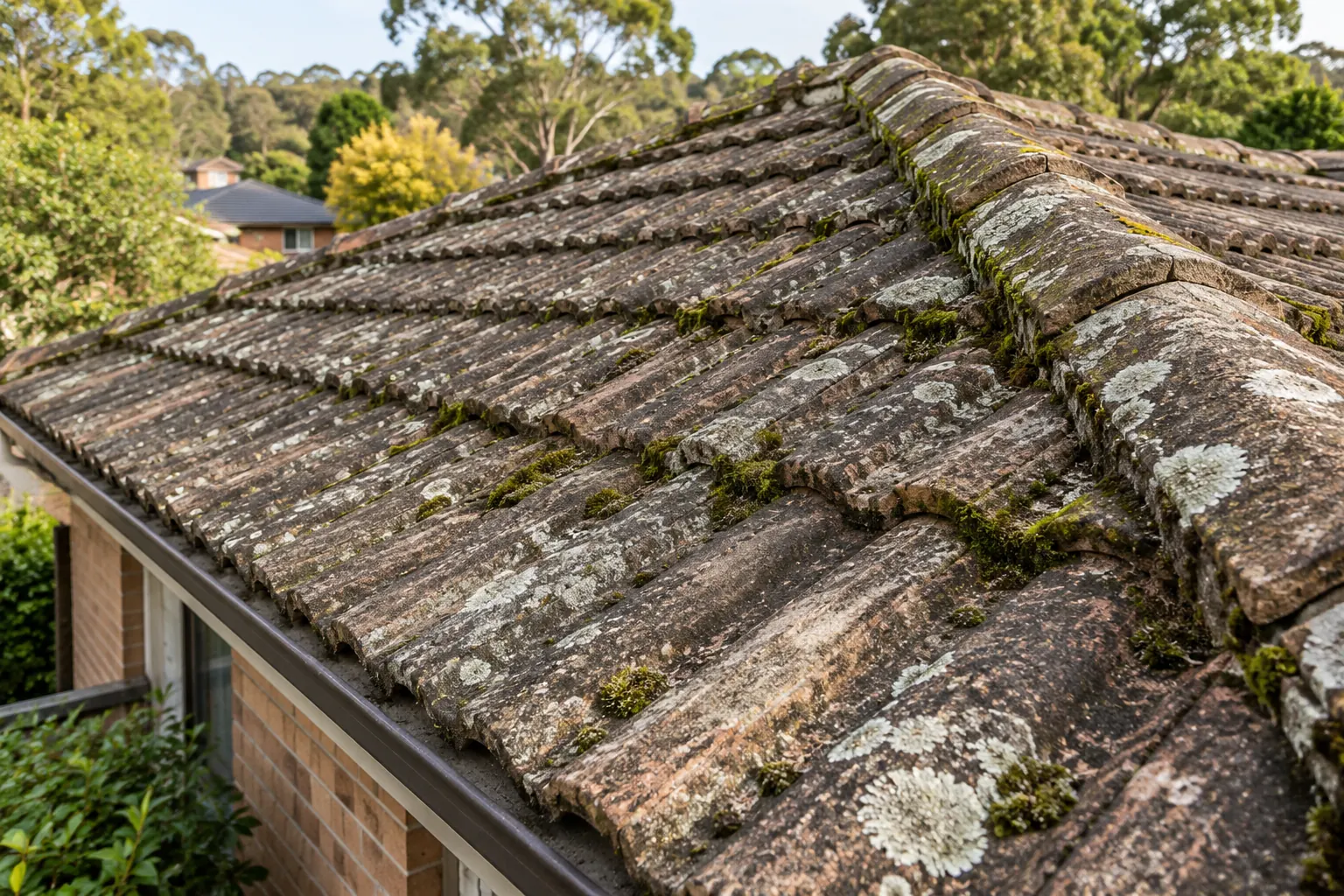
Learn more →A tile roof restoration is a repair to the mortar work and the tiles, finished with a protective coating. The order matters. The money is in the bedding and pointing under the ridge and hip caps — not in the colour that goes on last.
A roof sprayed over crumbling pointing looks excellent for about a year and leaks the whole time. If a quote is mostly about the coating, it is a paint job wearing a roofing word.
Call (02) 8000 1103 for a free assessment of whether your roof is a candidate.
It is worth being direct about this, because restoration gets sold to people who should be spending the money elsewhere.
The Inner West splits roughly in two for this kind of work. The attached Victorian terrace belt through Newtown, Erskineville, Balmain and Annandale is largely slate and box gutters, so restoration mostly does not apply.
West and south of Ashfield it is a different story. Inter-war and Federation tiled roofs dominate Dulwich Hill, Summer Hill, Croydon, Croydon Park, Burwood, Concord and Five Dock. On the ridges above the Cooks River at Earlwood, Canterbury and Hurlstone Park the post-war and inter-war tiled stock is exactly what restoration was designed for.
Two local conditions shape the work there. Established street trees drop a continuous leaf load into valleys and gutters, keeping them wet. And the dense roofscape means short, intense downpours arrive faster than the drainage can clear them, so a roof that is already holding water in its valleys gets tested hard.
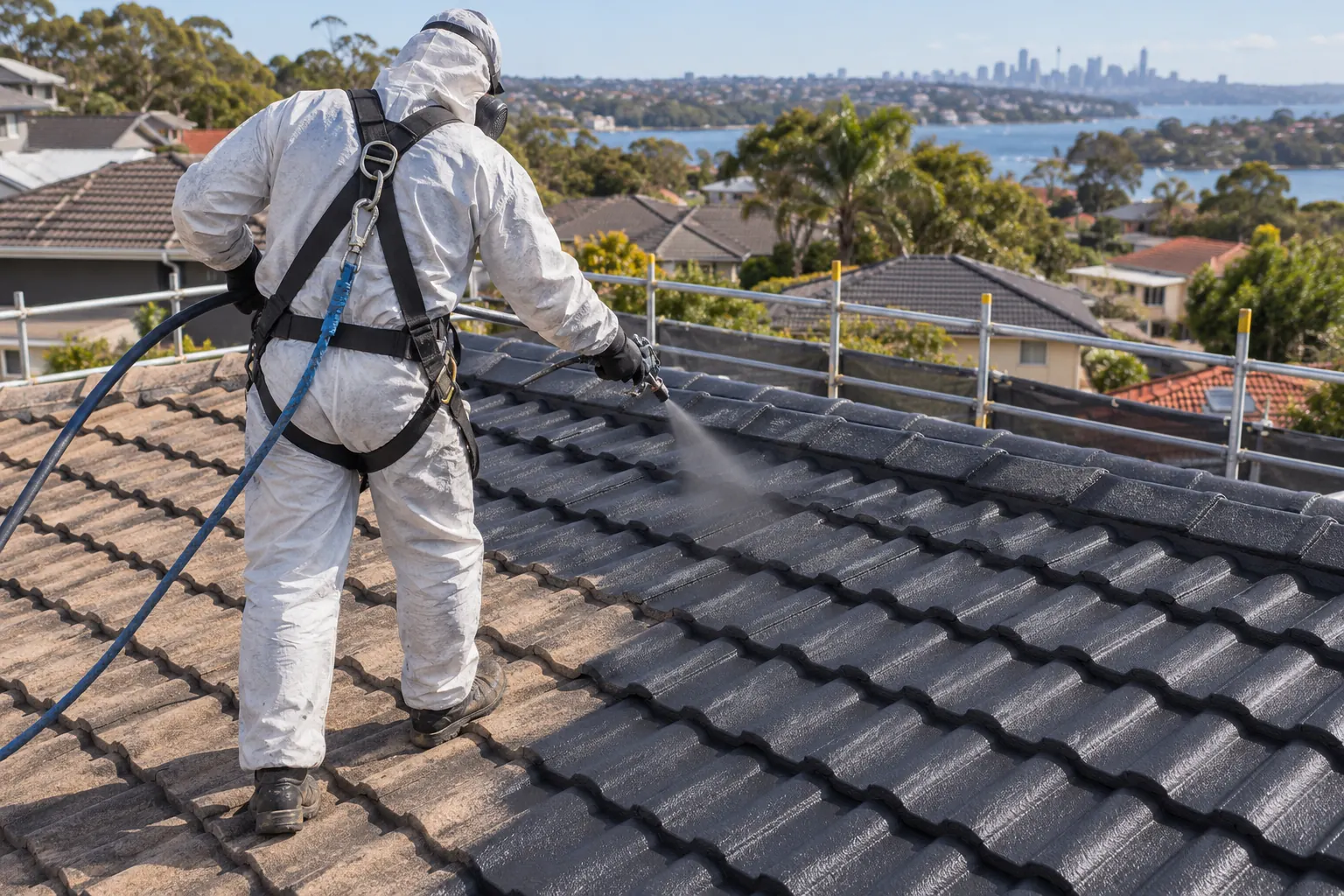
If your roof sits in a conservation area, the colour you recoat it is not entirely a matter of taste. The councils covering these suburbs — Inner West, Burwood, Strathfield, Canada Bay and Canterbury-Bankstown — all apply conservation area controls through their LEPs and development control plans, and finish and colour on a street-visible roof can be among them. Strathfield lists around 17 conservation areas under Schedule 5 of the Strathfield LEP 2012, with Federation Queen Anne character noted in the Churchill Avenue, Homebush Road and Redmyre Road areas.
In practice: muted heritage tones in a low-sheen finish are the safe ground, and we check what applies to your address before recommending a colour.
Restoration is weather-dependent in a way repairs are not. Cleaning needs the roof to dry before coating, and coating needs a dry window to cure. A run of humid, showery days stretches the programme, and pushing coating onto a damp roof is how a finish fails early.
A typical single-storey tiled roof is a small number of working days spread over a slightly longer calendar window to allow for that. The quote states the programme and does not pretend the weather is controllable.
Roof area and pitch, the number of ridge and hip metres to rebed, how many replacement tiles are needed and how hard they are to match, access, the amount of moss and debris to remove, and whether flashings and valleys need work as well. The written quote follows the free inspection and itemises it.
Work is carried out by established, licensed and insured roofing contractors working to NSW Fair Trading requirements, with a written workmanship warranty on completed work.
Call (02) 8000 1103 or request a free quote. The full suburb list is on the service areas page.
Tell us what you need and we'll get straight back to you. Prefer to talk? Call (02) 8000 1103 and speak to someone local.
Call (02) 8000 1103No, and if someone quotes it as one, that is the warning sign. The structural part is the bedding and pointing under the ridge and hip caps. Those caps sit on mortar that cracks and crumbles with age, letting water track straight underneath. Rebedding and repointing is the work. The coating that goes on afterwards is the finish, not the repair.
Tiled roofs, mostly concrete and terracotta, in sound structural condition. That describes a large share of the housing from Dulwich Hill and Summer Hill through Croydon, Burwood, Concord, Earlwood and Canterbury. It does not describe slate, which is not a restoration material, and it does not describe a tiled roof whose battens or rafters have already gone.
Properly rebedded and repointed ridges and hips with sound tiles underneath can give a long extension of serviceable roof life, and it defers a full replacement at a fraction of the cost. What nobody can honestly give you is a guaranteed number, because it depends on the condition of the tiles, the exposure and whether the roof is kept clear of debris afterwards.
Tiles have to be walked on to do the work; the trick is where. Weight goes on the lower third of the tile over a batten, never mid-span. Some breakage on a brittle old terracotta roof is normal and replacement tiles are allowed for in the quote. A roof too fragile to work on safely is a roof that needs replacing, and you would be told that.
It comes off first. Under established street trees and on south-facing slopes through the Cooks River suburbs, moss and lichen hold moisture against the tile and keep it permanently damp. The roof is pressure cleaned, debris is cleared out of the valleys and gutters, and only then is the condition of the tiles underneath properly visible.